Article
Between the screen and the patient: Restoring presence with ambient listening
Average read time: 2 minutes
The modern clinical visit: Well-intended technology, unintended consequences
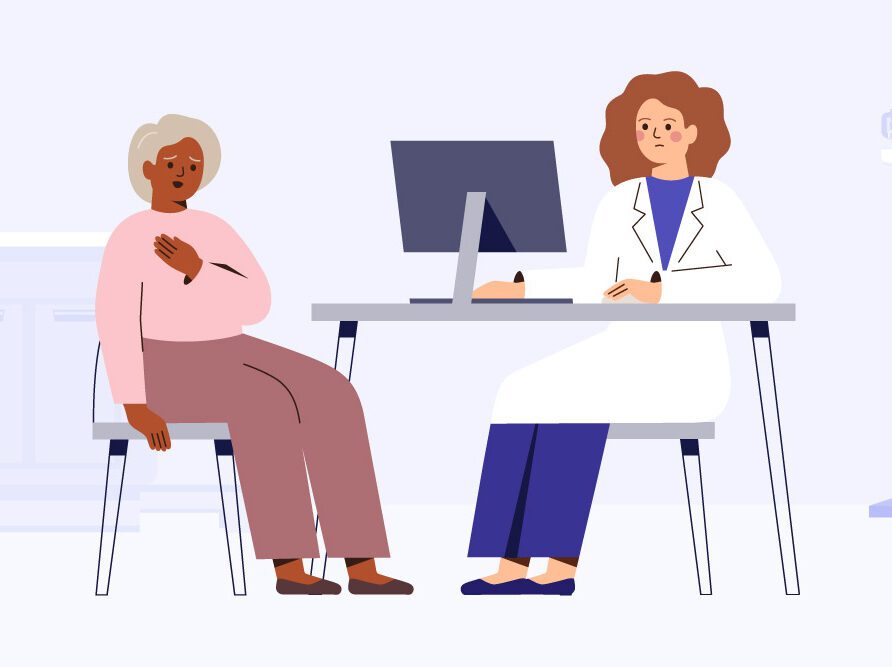
Electronic health records are intended to improve care quality, safety and access to information. In many ways, they’ve delivered. But they also introduced a new challenge: documentation became the center of the visit. Instead of focusing on the patient, clinicians are often caught in a swirl of charting and note-taking. Attention is split between the person in the room and the screen—typing, clicking and navigating workflows while trying to stay present. Patients notice. Providers feel the strain.
Today, clinicians spend nearly twice as much time on documentation as they do on direct patient care. The result is burnout, dissatisfaction and hours of after-work documentation that stretch long beyond the clinic day.
My journey as a human caring for humans
My journey to becoming a physician began because I believed in the power of connection. As an OB/GYN, I was drawn to medicine not just for science, but for relationships, listening to patients, building trust and guiding them through some of the most important moments of their lives. At its core, healthcare is human, and both patients and providers deserve tools to make the clinical experience positive and meaningful. But over the past decade, the clinical experience has increasingly felt anything but.
As an OB/GYN, I was drawn to medicine not just for science, but for relationships, listening to patients, building trust and guiding them through some of the most important moments of their lives.
Bringing humanity back to the clinical encounter
Ambient AI represents a fundamental shift in how technology supports care delivery. Instead of requiring clinicians to focus on documentation during the visit, ambient solutions quietly listen to the conversation and transform it into structured clinical documentation in the background. The technology adapts to the clinician—not the other way around.
Inside the exam room, the difference is felt. Patients experience more eye contact, fewer interruptions and a stronger sense of presence. Trust grows when clinicians are fully engaged rather than tethered to a keyboard.
From the provider perspective, ambient AI lifts the cognitive burden of “remembering to document” and frees clinicians to focus on the patient in front of them. Early evidence shows roughly a 20% reduction in time spent writing notes and nearly one hour less per day of after-hours documentation, translating into higher clinician satisfaction and a meaningful reduction in administrative burden.
Beyond the exam room: The power of presence
 The benefits of ambient AI continue well beyond the end of the visit. Clinicians finish the day with documentation that is more complete, more accurate and reflective of the full clinical narrative, without reconstructing conversations from memory hours later. Health organizations are beginning to see downstream improvements as well, including fewer documentation queries, better alignment and increased confidence across clinical and revenue-cycle workflows. Clinicians report less fatigue at the end of the day because documentation no longer follows them home.
The future of ambient AI
Looking ahead, ambient AI is just the starting point. The future of ambient AI is not about replacing clinicians. It’s about strengthening them, reducing friction, supporting decision-making and letting technology fade into the background where it belongs.
As both a physician and a healthcare technology leader for Sunrise, I believe ambient AI represents one of the most meaningful opportunities we have today to improve clinician experience while strengthening patient care. Learn more about how we’re building technology that supports conversation instead of interrupting it, helping us move closer to the healthcare experience we all set out to deliver. Sunrise Thread AI.
SUBSCRIBE TO OUR INSIGHTS
Dive deeper into how we are elevating healthcare
About the author