Article
Does your EHR truly support behavioral health providers?
Average read time: 3 minutes
In this blog you will learn about:
- Trends in behavioral health
- The value of bulk group therapy notes
- Customizing notes for individual patients
We’ve come a long way from when electronic health records (EHRs) were first built as billing systems. As we progress as an industry toward better usability, it’s clear that general best practice workflows have not reflected the daily realities of clinical users, especially at the specialty level.
Behavioral health is just one clinical focus area that exemplifies the gap between health IT and provider needs. Let’s explore the current state of behavioral health and how EHRs can evolve to support provider satisfaction and efficiency while promoting patient-centric care.
Behavioral health trends since COVID
 The COVID-19 pandemic was a turning point in behavioral health demand. Consider the following trends identified since its onset:
- Approximately 23% of adults received mental health treatment within the span of a year.
- Among adults with a mental illness, 17% of those with a perceived unmet need for treatment said there were no openings in the treatment program or with the healthcare professional they wanted to go to.
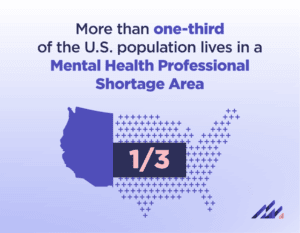
- More than one-third of the U.S. population lives in a Mental Health Professional Shortage Area, and these shortages are particularly pronounced in rural areas.
As the volume of patients seeking treatment has risen, more healthcare organizations have begun providing outpatient behavioral health services. Many have grown their group therapy offerings to expand access to these services in their communities—but EHRs largely have not caught up.
“…more healthcare organizations have begun providing outpatient behavioral health services… but EHRs largely have not caught up.”
Single workflow for multi-patient sessions

One of the biggest sources of inefficiency I’ve heard in conversations with behavioral health providers is group therapy documentation.
In a single session, there might be 10 patients and a multidisciplinary team including a psychiatrist, a psychologist and a social worker. At the end of that session, the providers typically must document a shared group summary for each participant, though many EHRs don’t support this need. Providers are left manually copying and pasting notes across the ten different records. This sort of inefficient process drains time and increases the risk of errors.
Clinicians should be able to document group session details, participant lists, session objectives, activities and outcomes in a single streamlined process that applies the group note to all participants simultaneously. EHRs traditionally have not been able to accommodate bulk group therapy notes, underscoring the need for flexible health IT solutions that align to the ways clinicians prefer to work.
Individualized patient notes
While bulk group therapy notes can save a lot of headaches, providers must also be able to individualize notes for patients in the session. The system should support documentation for each patient’s progress, participation and treatment details.

NOW AVAILABLE
Paragon CarePath: Charting a new path toward better care
With the time saved from a group therapy bulk note capability, providers can then spend more time adding customized remarks to each patient’s record to ensure personalized care documentation. Striking a balance between efficiency and individualization is just one example of how EHRs can produce real value when they reflect what users truly need.
By evolving to support the specific workflows of behavioral health delivery, EHRs can support both providers and patients. It’s not just about better documentation. Ultimately, it’s about better experiences and outcomes.
At Altera Digital Health, we are bringing rural, critical access and community hospitals the EHR capabilities they need with an available behavioral health module through Paragon® Denali. Learn how the cloud-native, containerized EHR can support your teams here.
SUBSCRIBE TO OUR INSIGHTS
Dive deeper into how we are elevating healthcare
About the author