
Blog
From “Big Bang” to “Continuous Flow”: Why CI/CD is a clinical imperative
In the world of healthcare IT, “update day” has historically been met with a mix of anticipation and anxiety. Traditionally, Electronic Health Record (EHR) updates were massive, infrequent events that required months of planning, downtime windows and significant cognitive re-training for clinicians.
By moving to a CI/CD (Continuous Integration/Continuous Delivery) deployment method, that narrative changes. It’s no longer just updating software, but rather, evolving the way clinical care is supported.
What is CI/CD in a clinical context?
To understand why this matters at the bedside, we have to look at the “pipeline.” CI/CD is a method of frequently delivering apps to customers by introducing automation into the stages of app development.
- Continuous Integration (CI): New features or bug fixes are regularly tested and merged. In clinical terms, this means “safety-checking” every small change before it ever reaches a user.
- Continuous Delivery (CD): Once verified, these changes are automatically prepared for release. This enables a steady stream of incremental improvements rather than a massive, disruptive overhaul every year.
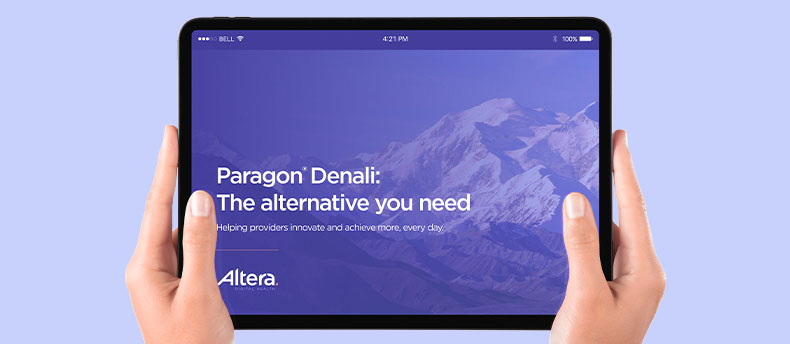
FREE EBOOK
Paragon Denali: The alternative you need
The clinical intersection: Why this matters to providers
When we talk about CI/CD, we aren’t just talking about code; we are talking about responsiveness. Here are three ways how this technical shift intersects with clinical care:
- Patient safety as code
In a manual deployment world, human error is the greatest risk. CI/CD enables baking in clinical safety checks directly into the deployment process. Automated testing ensures that a fix in one area of the EHR doesn’t inadvertently break a critical workflow in the ICU or Pharmacy.
- Rapid feedback loops
Clinicians often feel that their feedback goes into a “black hole.” With CI/CD, the distance between a clinician reporting a workflow hurdle and a developer deploying a fix is drastically shortened. By iterating on the user interface (UI) in smaller, more digestible increments, it reduces the “change fatigue” that often leads to burnout.
- High availability and uptime
The traditional “Big Bang” update often required hours of downtime. Modern CI/CD practices enable a roll out of updates with near-zero downtime. For an Emergency Department that never closes, this isn’t just a convenience; it’s a necessity for continuous patient monitoring and documentation.
Looking ahead with Paragon® Denali
Moving Paragon Denali to this model is about agility. As medical regulations change and new clinical protocols emerge, our software must keep pace. CI/CD gives us the infrastructure to be as dynamic as the medicine we practice.
By treating our digital infrastructure with the same rigor and “continuous improvement” mindset we apply to clinical quality, we ensure that our technology remains a bridge to better care, not a barrier.
Learn more about Paragon Denali.
KEEP UP WITH OUR INSIGHTS
Dive deeper into how we are elevating healthcare
About the author